A giant black hole is lost in space. Here's how it's shocking astronomers.
Key Takeaways
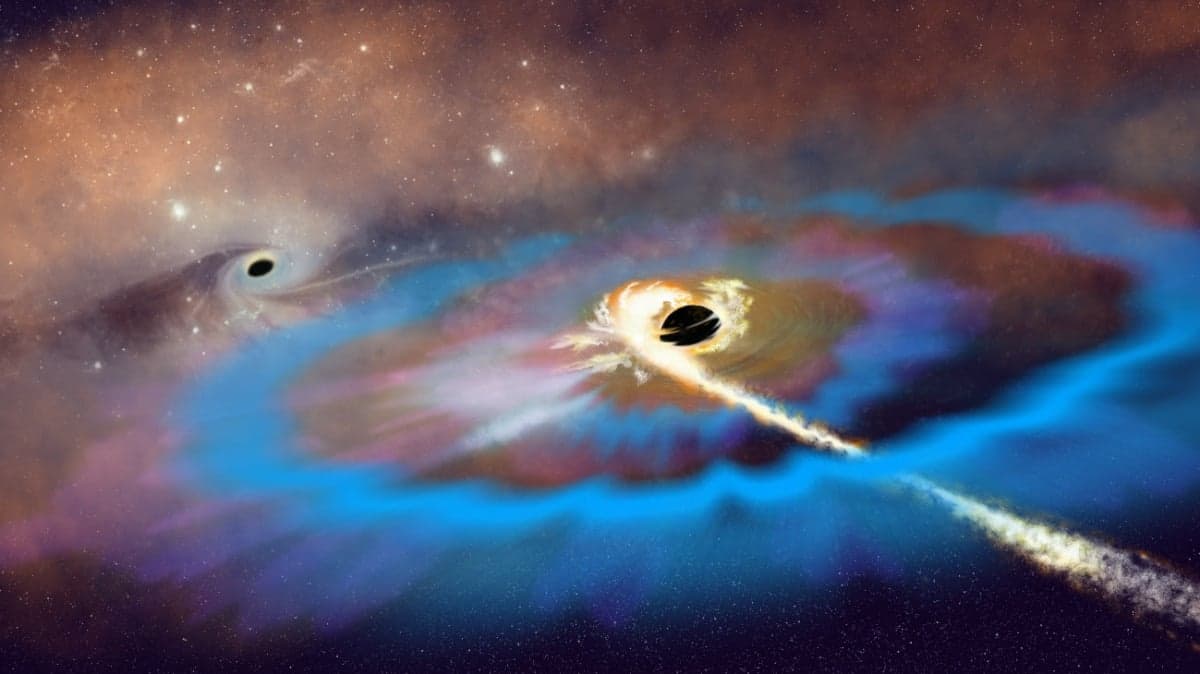
- An enormous black hole (1 million+ suns) was discovered 2,600 light-years away from its galaxy's core, where a larger black hole resides.
- The black hole was detected via a tidal disruption event (TDE) after consuming a star, which caused it to light up.
- Subsequent radio observations revealed two bright flares of radio waves that changed faster than any previously seen TDE.
- The rapid evolution of the radio flares suggests delayed and previously unknown processes are at work when black holes consume stars.
- The black hole's unusual location supports theoretical predictions that massive black holes exist away from galactic centers, offering a new way to find them.
Scientists have discovered an enormous black hole, weighing over a million suns, located thousands of light-years away from its galaxy's center, an unusual position for such an object. The discovery, initially made by the Zwicky Transient Facility, became apparent when the black hole consumed a star, causing it to light up in a tidal disruption event (TDE). Researchers, led by UC Berkeley, used radio telescopes to observe the event, labeled AT 2024tvd, and found it produced two exceptionally bright radio flares that evolved much faster than expected. This rapid change, described as 'truly extraordinary' by the lead author, suggests delayed and previously unknown processes govern how black holes eject material after consuming stars far from galactic cores. Theorists have long predicted the existence of such off-center massive black holes, and this discovery provides a new method for finding them, possibly through mechanisms like three-body interactions or galactic mergers. Continued monitoring of this bizarre object promises to reveal more about the dynamics of material ejected by black holes.